


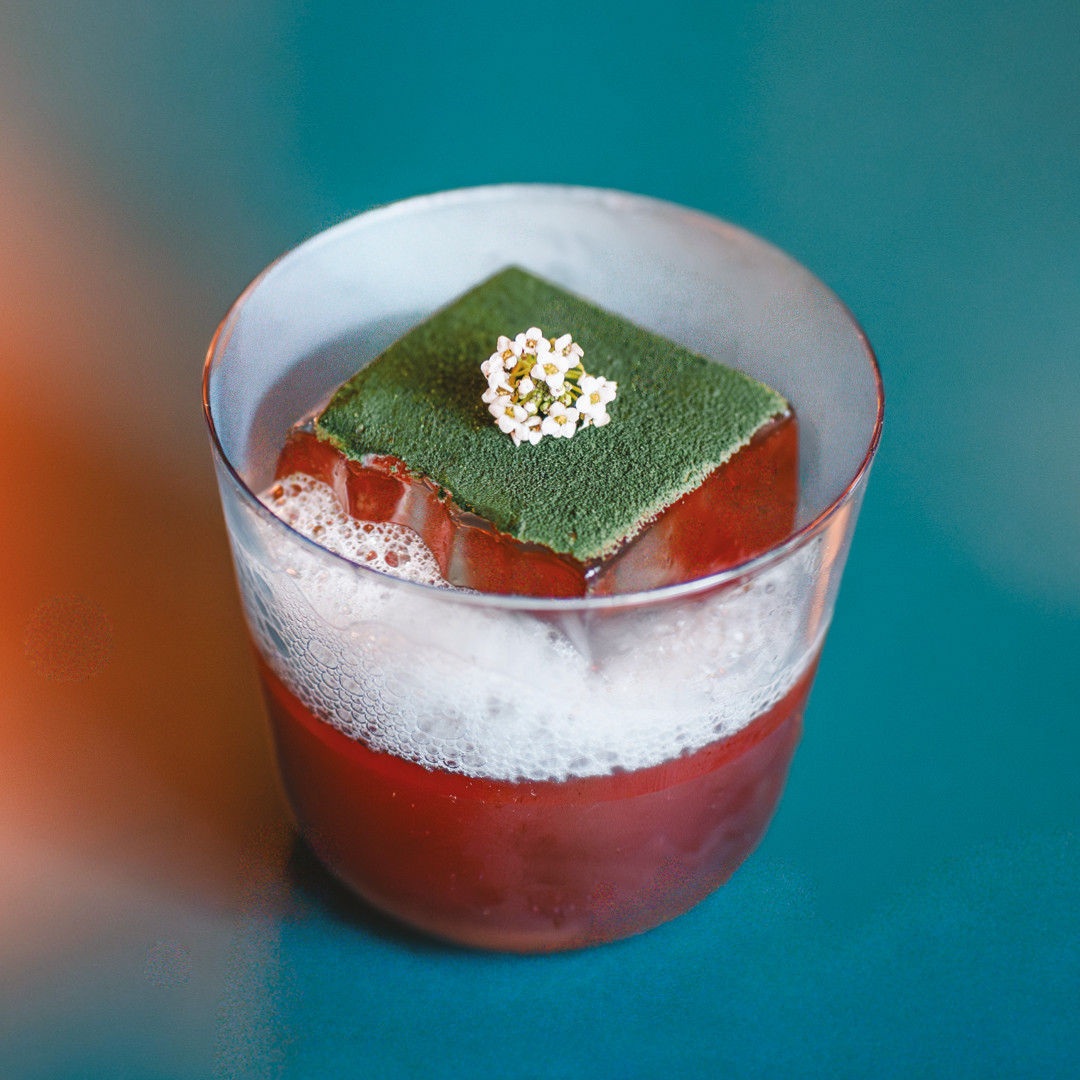
A move towards presenting drinks in a similar way to that of edible dishes seems like a natural evolution to Ellen Manning.
The plate is my canvas, and each ingredient is a brushstroke of intention.” The words of chef Yann Bernard Lejard. Highfalutin perhaps, but not a million miles from the mantra ‘you eat with your eyes’. But what about drinks?
When it comes to cocktails is there any such equivalent to ‘plating’, or is the era of arrangement within the glass yet to take a step up? Passing Fancies’ Matt Arnold thinks so. When he shared his Johnnie Walker-based creation New Shores online, it was with thoughts on plating, describing how presentation can shape an experience even before the first sip. In the same way we eat with our eyes, he said, why can’t we drink with them too?
Minimalism vs maximalism
According to Arnold, plating cocktails isn’t a madcap scheme or clever gimmick but more the idea of a general shift in the way bars are presenting their serves. “We’ve seen a massive trend of minimalism over the past three or four years that’s dominated the space,” he told Class. “Everything is clarified, see-through and made to almost visually show clarity of flavour. I think we’re about to go into a point where we’re putting the fun back into cocktails.”
That doesn’t mean unnecessary garnishes or crazy creations, but serves put together with the same thought, time and attention to detail that makes people covet a restaurant dish after one glimpse – unlike, perhaps, another drink that looks like all the others. There’s an element of perception around visual complexity, argues Arnold.
“If you see a beautifully plated lobster dish with a curried puree, some citrus elements etc, then people go, ‘wow, look at the time and energy that went into that’. But if you see a drink in a coupe that’s taken two weeks to make with a week’s ferment, people go, ‘oh it’s just a cocktail’. I want to break that down and look at how we can bring the average guest to consider the time and value [that’s gone into the drink], and I guess that comes into the way we plate it.”
Plating without a plate
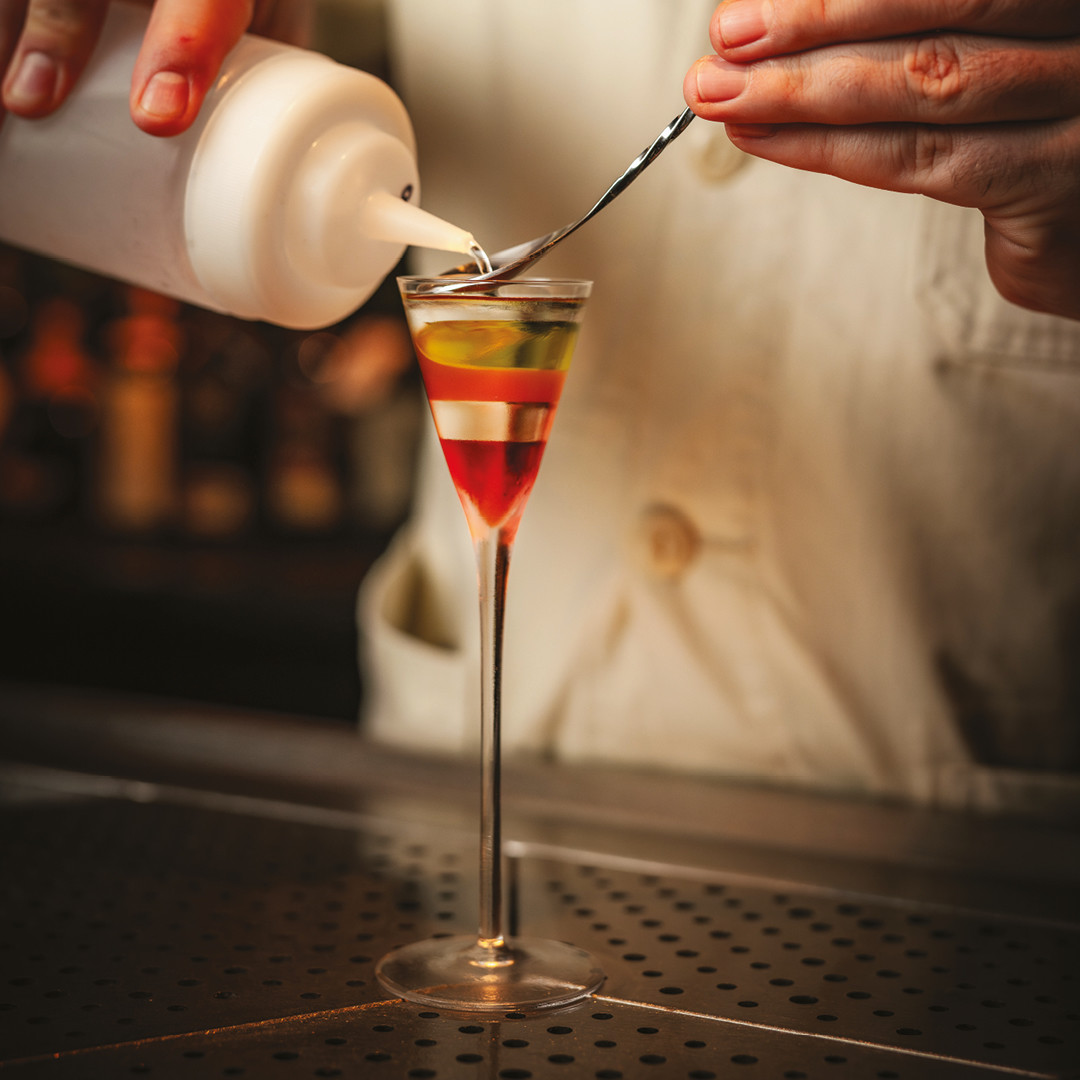
It makes sense, but the reality of plating when there’s no plate and the ‘dish’ is a liquid is less clear. Pretty garnishes are an obvious addition, and the use of different receptacles. But how do bars take things one step further? There’s layering – something that has proved popular in Archive & Myth’s Pousse Cafe, a drink that’s small in size but big in wow factor thanks to its eight layers of liqueurs, which head bartender Laurie Howells confirms is hugely popular. For Howells, it’s important any garnish or addition to a drink is intentional. She’s not alone – with most bartenders agreeing that the last thing a garnish or interesting plating should be is something reminiscent of the worst examples of maximalism.
Elaborate garnishes could be one route, but ‘plating’ seems to be about something more complex. Perhaps, suggests Kieron Moore, head chef at Thai restaurant Soi in Birmingham – and no stranger to the idea of plating adding to the experience – it would take a bar to commission its own glassware dividing elements into different compartments, combining them as someone drinks in the way edible dishes come together as someone eats. Chris Jarrett, aka The Bearded Barman and owner of Kona in Falmouth, gives a similar example, citing Three Sheets Soho’s Bramble featuring reduced blackberry juice and Pinot Noir inserted into a dimple in an ice cube, so it slowly combines with the drink as you sip.
In the same way plating food has moved on from ‘a sprig of parsley and a lemon swan’, so have cocktails when it comes to adding not just colour and flavour, but aroma and texture too, observes Great British Menu veteran Jude Kereama, chef patron of Cornish restaurants Kota and Kota Kai. At the latter, glasses for a Pineapple & Chilli Margarita are pre-frozen with chilli and lime on the sides, making them “aesthetically beautiful” but also adding aroma and flavour. Similarly, a Thai Basil cocktail is finished with a coconut foam topped with Thai basil leaves so it “almost looks like the top of a curry”. Perhaps, in the way restaurant dishes often come with little separate additions, plating drinks will go beyond the single glass. Think the addition of pickles with the Gibson Martini at Waltz. Or a hash brown that Jarrett adds to his Tatty Vesper – a nod to the potatoes used to make the Aval Dor vodka within it.
There’s clearly an art to plating – ask any chef. Which means embracing the concept in drinks might lead to similar processes as the culinary equivalent. Drinks prepared element by element by different bartenders in the same way as a Michelin-starred restaurant dedicates individual chefs to single items, building a dish piece by piece before it hits the pass. Or final elements added tableside in the same way a sauce is poured on to a dish in front of you in a top restaurant – something some bars already do.
The comparisons are many, as is the potential. And a shift to ‘plate’ drinks in the same way edible dishes are seems a natural evolution. Particularly when you consider where we have come from – after the austerity of minimalism, cocktails had nowhere to go but become more expressive again.