



When Mitsuhiro Nakamura invited The Connaught director of mixology Ago Perrone and Cocktail Lovers co-founder Sandrae Lawrence to The Nine Elms Bar at Park Hyatt London River Thames, where he is chief mixologist, his aim was to spread the word about Japanese spirit shochu, and about its mixability in particular.
“I want to promote shochu for the cocktail side, because I think it’s really cocktail friendly,” he said.
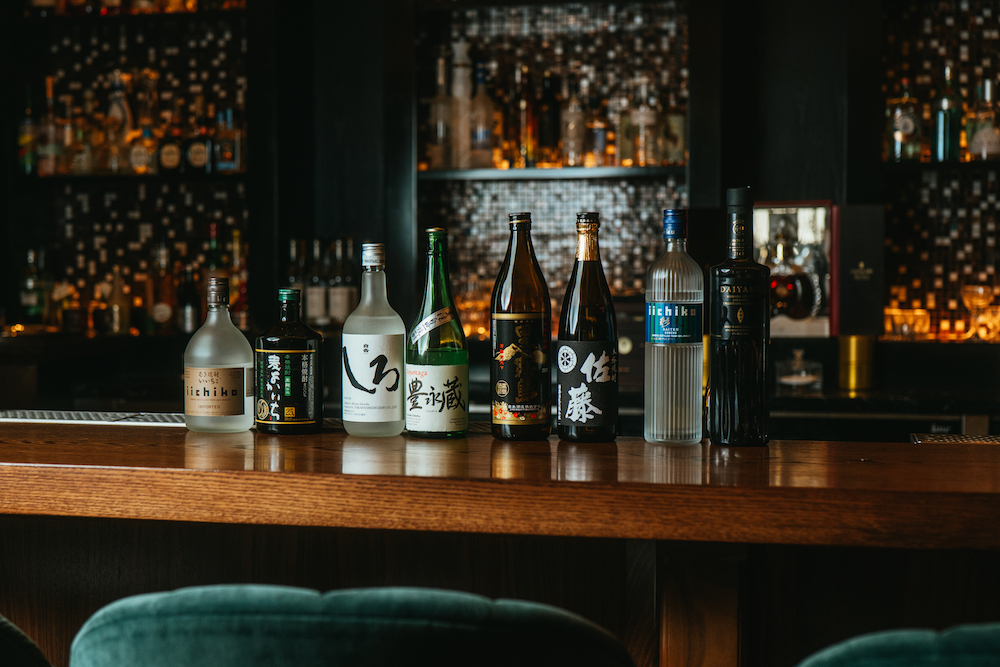
But first, Nakamura presented a brief history of the spirit, as well as an overview of its production methods. “Its history is about 500 years old,” he began, explaining that it is generally produced from barley, rice or sweet potato, but that other raw ingredients are used, including shiso, sesame and black sugar.
Shochu, like sake, is made using koji mold, but is distilled, and is generally produced in Kyushu in the south. In contrast with most Western spirits, it is usually distilled just once, and is bottled between 20% and 25% ABV.
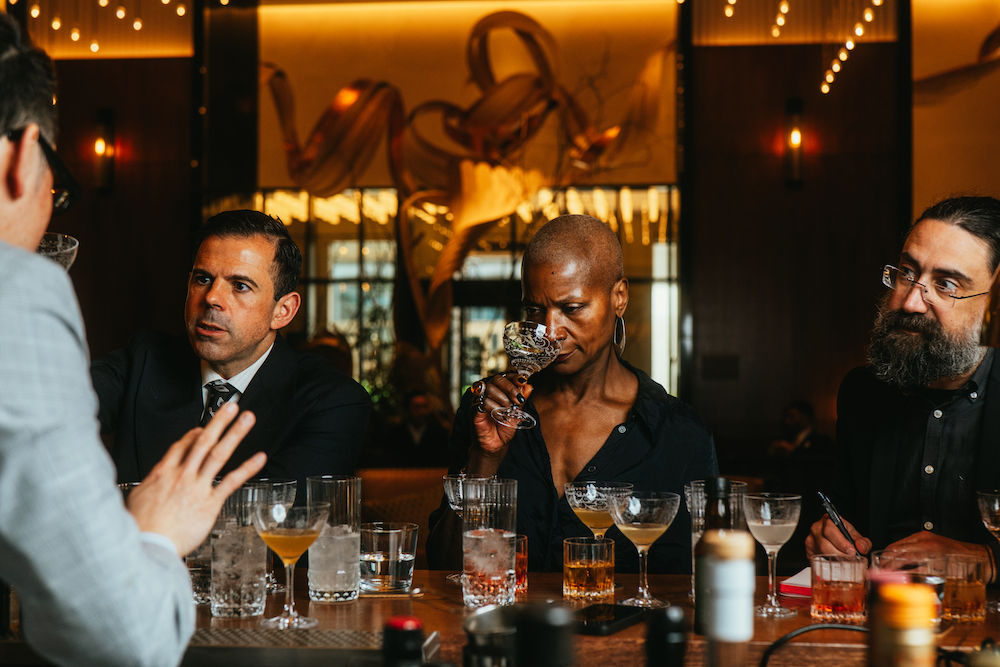
After a tasting of two shochus made from each of the three most common raw ingredients proved the breadth and flavours on offer in the category, Nakamura stepped behind the bar to demonstrate their versatility in an array of different cocktails. During the interactive session that followed, Lawrence and Perrone made suggestions, and sampled some exceptional drinks in the process.
First up, to highlight the complex yet delicate character of the barley expressions, Nakamura created a Martini Tonic with dry vermouth. At Perrone’s suggestion, he switched out the tonic for soda, effectively creating a Martini Highball. The result, light and elegant with beautiful shochu aromas, had a savoury character too, ideal for pairing with food.
Next was a barley shochu Negroni, diverging from the classic ratio with a higher quantity of the spirit. “It couldn’t be equal parts, or the shochu would disappear,” said Perrone, who noted the lower sweetness compared to a standard Negroni.
For the rice shochu, Nakamura created a drink with elderflower liqueur and lemon juice, later adding a dash of prosecco. “I’ve seen a lot of shochu cocktails, but most of them use Japanese ingredients, like shiso. I was thinking that we needed to explore its potential further – and it matches well with European ingredients too,” he said.
“You don’t want any more barriers to entry,” agreed Lawrence.
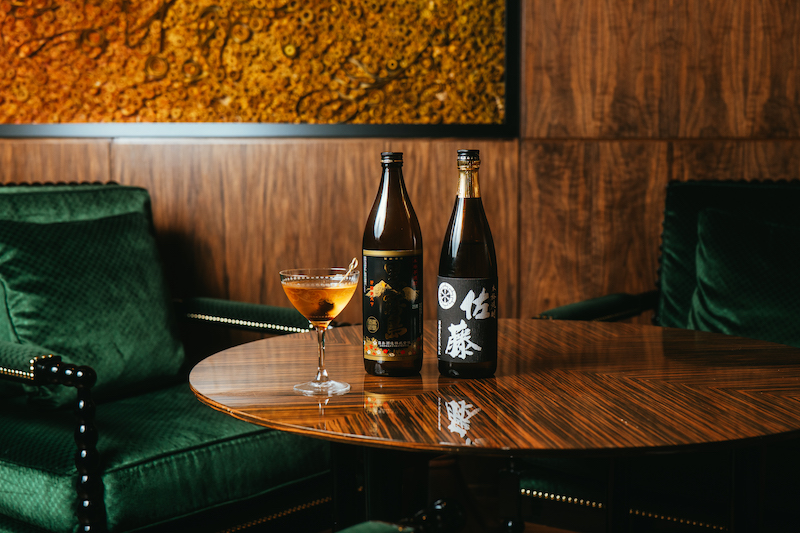
When it came to mixing the sweet potato shochus, the idea was to highlight those earthy, nutty notes in a drink inspired by the Old Fashioned and Manhattan. Perrone suggested using sweet vermouth and Benedictine, resulting in a drink that truly allowed the shochu to shine.
“For these, with a stronger character, you can utilise them as the main ingredient, but also as a modifier with other spirits – there's more flexibility,” said Perrone.
For a Sour-style drink, again using the barley shochu, Benedictine was in the mix again, with some lemon juice, for a Sidecar-inspired serve with a Pedro Ximénez float borrowed from the New York Sour. “You really notice the shochu on the nose – it’s like a Genever Sour,” said Perrone.
It may have centuries of history, but there’s no doubt that this is a category that’s entirely relevant to the cocktail bars of today, and not limited to Japanese-style venues either.
To experience the unique flavours and versatility of Japanese shochu for yourself, don’t miss Drink Japan in London this September, where you can taste a wide selection, and try making cocktails with these at the workshop too.
Venue: Royal Horticultural Halls, Lindley Hall, Elverton St, London SW1P 2PB, UK
Dates: Friday 25th and Saturday 26th September 2026