



Japan’s shochu remains almost entirely undiscovered outside of its home country, despite its rich history, broad array of flavour profiles, and serious mixability.
Recently, The Connaught director of mixology Ago Perrone and Cocktail Lovers co-founder Sandrae Lawrence visited The Nine Elms Bar & Lounge at Park Hyatt London River Thames, where chief mixologist Mitsuhiro Nakamura set out to remedy this.
Over the course of a few hours, they covered shochu’s history and production methods, tasted a selection of different examples, and put some of these through their paces in cocktails too.

Like many in London, Perrone first encountered this Japanese spirit at Shochu Lounge, which opened its doors below Roka on Charlotte Street in 2004, and continues to spread the word about shochu to this day. Back then, Perrone tried it both neat and in cocktails. “It was presented as being like Japanese vodka, which is an easy way to understand it, but there wasn’t the knowledge that it was made from different raw materials,” he said. “It was associated with something of quality, but you needed to understand it.”
“My first impression was that it's a delicious drink,” said Lawrence, remembering another London venue, Shumi, that was pioneering in its use of the spirit in the mid-2000s too.
Shochu has been around significantly longer, of course. “Its history is about 500 years old,” began Nakamura, before explaining that it is generally produced from barley, rice or sweet potato, but that other raw ingredients are used, including shiso, sesame and black sugar.
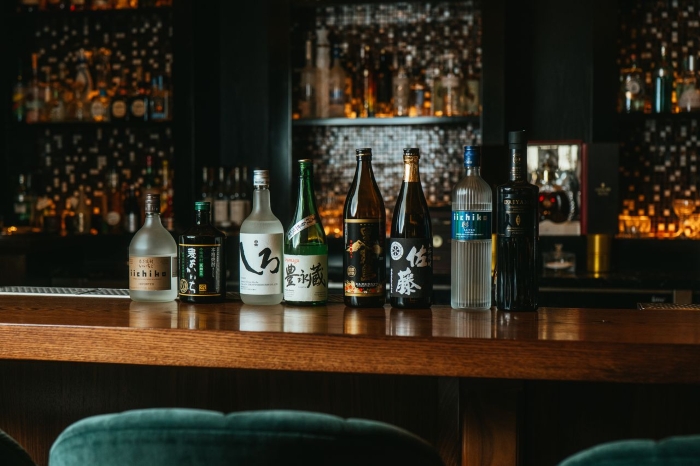
To better understand shochu, Nakamura compared it with Japan’s better-known drink, sake – always made from rice with koji mould, fermented, and produced in various parts of the country. Shochu shares sake’s use of koji, but is distilled, made from various raw ingredients, most commonly barley, rice and sweet potato, and is generally produced in Kyushu in the south. In contrast with most Western spirits, it is usually distilled just once, and is bottled between 20% and 25% ABV.
A pair of barley shochus demonstrated the breadth of flavours that shochu can offer, both delicate yet complex, with one described as an already-diluted Martini, and another like Dutch genever. “With just one distillation, the main character speaks loudly,” said Perrone, appreciating fresh notes of citrus zest and spice.
Rice was next, with aromas more reminiscent of sake – both fruity and floral – and notably delicate overall. Those made from sweet potato, meanwhile, tended to the opposite end of the spectrum,
“These are more on the whisky end, more like evening, and more like a digestif,” said Lawrence.
Nakamura added that he thought this style might be particularly suited to bars in the UK. “In my three years here, I’ve seen that bartenders like a characteristic spirit, so I think the sweet potato might be more interesting here.”

Thoroughly convinced about the versatility and complexity offered by this spirit category, conversation turned to the best way to promote it outside of Japan.
“It's an education thing, and a storytelling thing,” said Lawrence. “And sake has come back, with people starting to understand that, which should help shochu.”
“As a category, it's unknown – it's undiscovered,” added Perrone. “There's so much marketing from other spirits categories, that you have to find the truly passionate people.”
To experience the unique flavours and versatility of Japanese shochu for yourself, don’t miss Drink Japan in London this September, where you can taste a wide selection and try making cocktails with these at the workshop too.
Venue: Royal Horticultural Halls, Lindley Hall, Elverton St, London SW1P 2PB, UK
Dates: Friday 25th and Saturday 26th September 2026