
In the next instalment of our London bar chronicles, Ben Reed picks up the story at the turn of the Millennium, guiding us through the key events, people and places of a fast-changing cocktail scene.
If the ’90s were the childhood years of London’s modern-day bar scene, then the 2000s were decidedly teenage. We were beginning to seek social acceptance and to establish our identity among our global peers on what was an embryonic world cocktail map.
It was beginning to dawn on us – this pioneer generation - that the party wasn’t ending nor the bubble bursting anytime soon. We were here to stay. We even had a new, younger generation of bartender nipping at our heels. Notably the young bartenders behind the stick at Jonathan Downey’s fledging empire, the Match Group.
There was still the abiding feeling that bartending wasn’t seen as a serious career among the public but also us, as we grew older and tired of the nightly grind of operations. Many of us set up agencies. Dick Bradsell though, he wasn’t budging from behind the bar.
This first raft of cocktail consultancies was partly born out of the need for a longer-term career option but also a sense of altruism – that there was work to be done, knowledge to be imparted. There was my own IP Bartenders (International Playboy Bartenders if you’re asking), Alchemist, Worldwide Cocktail Club, Squeeze, Behind Bars, Liquid Assets, Drink Pimps, the Gorgeous Group and Soulshakers. With this proliferation of knowhow, the UK scene developed quickly.
While some agencies created bespoke cocktail menus, advised on bar set up or catered events, my IPB developed a British Institute of Innkeeping-accredited training school. At our training bar we had 1,000 different liquids and around 800 cocktail books for reference. I’m still proud to name the likes of Ago Perrone, Eric Lorincz and Alex Kratena among our alumni.
This time was defined by bartenders’ thirst for education and we took IPB around the country on training roadshows, with the help of the likes of Bacardi Brown-Forman and Schweppes. Edinburgh and Leeds, in particular, were the scenes where cocktail culture had caught on.
Drinks companies soon realised that the best people to represent brands and build relationships with bartenders were bartenders. And so the era of brand advocacy was born.
The introduction of training programmes was integral to the evolution of the industry, whether brand led or internal. The idea being that the more the bartender knew, the more he or she could pass on to the consumer. It was accepted that we (trade and consumer) were on this journey together.
Resource
The internet was still in its infancy in the early 2000s. Facebook had only launched mid-decade and hadn’t yet become a helpful tool for bartenders. What really worked for us was chat rooms. Webtender (the site is still live – check it out) and Bar Bore were forums that all the top bartenders were on, sharing information freely.
Many of the recognised faces of this era were publishing books. I published my first, Cool Cocktails, in 2000 and it had done well, perhaps as it was pretty and hardbacked and there wasn’t much else about – but the floodgates really opened in the mid ’00s. The Joy of Mixology by Gary Regan was a proper bartender’s book and my cocktail bible for many years. I would wait with anticipation to see what Jared Brown and Anistatia Miller would publish next so that I could feature their findings in my brand presentations. Stateside Cocktail Kingdom was also doing a fine job producing quality reproductions of classic books. Now anyone could own a Jerry Thomas or Harry Johnson.
Bar training
Jonathan Downey at Match Group identified that knowledge was power and created an internal training scheme called First Tuesdays, where all the group’s bartenders got together. Everyone at Match started as a junior bartender and to progress through the ranks you had to pass practical and theoretical exams.
He used a revolutionary (non-brand backed) training company called Taste & Flavour that comprised charismatic elder statespeople from the drinks industry, each one a published expert in their field. Nicholas Faith sticks in my mind... an elderly, bow-tied and frizzy haired cognac aficionado who wrote for the FT and would begin his profanity-strewn training programmes by rapping the opening lines of Busta Rhymes’s Pass the Courvoisier.
Gone were the days when a bar only stocked brands owned by the big groups and more knowledge was needed because of this sudden proliferation of brands. Indie brand-focused companies such as Speciality Drinks breathed energy into the industry, diversifying the back bar with lesser-known brands. It was more important than ever to know your products.
Back then cocktail bars were in central or west London but, ever the visionary, Downey was the first operator to identify east London as the next big thing for bars, though they struggled initially. He brought Dick Bradsell on board to lead his teams (Ollie Peyton had previously done the same at the Atlantic) and enlisted Dale DeGroff from NYC as a consultant.
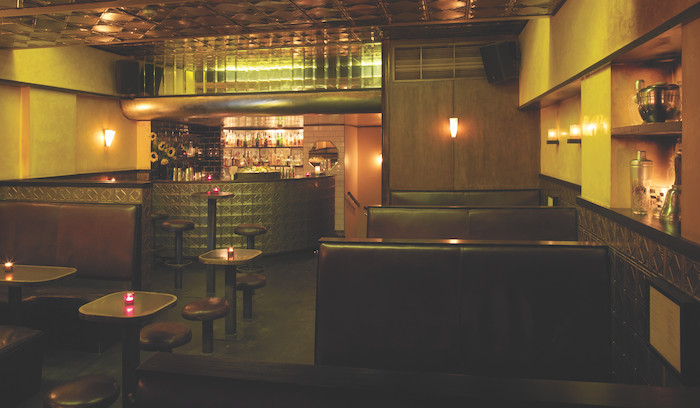
Outside of Match, Downey also set up the UK’s first speakeasy in the form of Milk & Honey on Poland Street, twinning Sasha Petraske’s seminal, groundbreaking bar in NYC. Notable among their achievements was implementing the UK’s first proper ice programme. The Match alumni went on to spread their expertise far and wide. The group bars manager at Match was Kevin Armstrong – he of Satan’s Whiskers.
There was now a growing group of vibey bars making good drinks. My personal faves were places like Lonsdale House, Montgomery Place, China Tang, Callooh Callay, Sketch, Detroit, Che and Harvey Nichols Fifth Floor. Green & Red and Trailer Happiness also deserve recognition for their services to tequila and rum respectively.
But it was Match bars’ drinks that set the tone for what bars were serving and slowly punters were getting more cocktail savvy – only one in 10 would try to order a Sex on the Beach or a Slippery Nipple.
The concept of cocktails was no longer a novelty or a luxury – it was getting closer to becoming democratised, but the consumer still didn’t understand the basics. We had to teach them the classics. Sidecars, Old Fashioneds, Mojitos, Martinis, Mules, Caipirinhas were the drinks and slowly the country was learning how to drink more balanced and more spirituous cocktails, rather than the lurid concoctions of past decades.
There were many muddled drinks, purées and lots of bubbles and, out of necessity, all the cocktails created in that era had ingredients that were recognisable to the consumer.
The age of the hotel
Five-star hotel bars had been the UK’s only premium cocktail outlets during the fallow years but, while they kept classics alive, by the mid 2000s they were mostly helmed by older bartenders and lacked innovation. London’s great institutions were about to see a real injection of youth. The new holy trio of Ago Perrone (at the newly launched Connaught Bar), Alex Kratena (Artesian at the Langham) and Erik Lorincz (Connaught Bar and The American Bar at the Savoy) were about to take the helm.
Losing that stuffy image was key. I vividly remember visiting Artesian at the Langham and being greeted by loud techno music, a fancy dress box at the entrance complete with cowboy hats and feather boas and slushy machines on the back bar. To quote Alex Kratena at the time: “Just because it hasn’t been done before doesn’t mean I shouldn’t do it.”
By rejuvenating those bars, these young bartenders played their part in elevating the London scene, putting us on the map. London had arrived, but it would be what we did in the following decade – 2010-2020 – that would make London rival New York as the cocktail capital of the world.